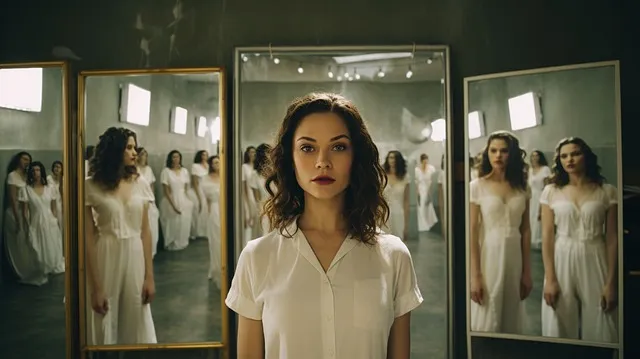
Exploring Simulacrum: Did Jean Baudrillard Consider Government, Social Movements, Countries, Religions, and Political Movements as Simulacra?
Introduction to Jean Baudrillard and Simulacrum
Jean Baudrillard, a renowned French philosopher and sociologist, was one of the leading thinkers behind postmodern theory, media studies, and the concept of simulacra. Born in 1929, Baudrillard’s work examined the intricate relationship between reality, representation, and social constructs. His influential theories have profoundly shaped how we perceive the world today, especially in an era dominated by media saturation.
One of Baudrillard’s most important contributions is his concept of simulacra: representations or copies of things that no longer have an original or real-world counterpart. For Baudrillard, simulacra are detached from any authentic reality and create a new hyperreality, in which the distinction between the real and the represented becomes indistinguishable. This concept is crucial to understanding modern society, which is increasingly shaped by images, signs, and symbols.
Baudrillard’s theory of simulacra can be applied to various societal systems — from government structures to social movements, from national identities to religious practices. In this article, we explore how Baudrillard’s concept of simulacra might apply to government, political movements, countries, and religions, questioning whether these constructs are authentic or merely representational.
Understanding Simulacrum: Definitions and Types
Baudrillard’s framework categorizes simulacra into four distinct stages, each representing an evolving relationship between reality and representation.
- The First Order: Reflection of Reality
The first stage involves representations that closely mirror the real world. Examples include photographs or paintings that directly reflect their real-life counterparts. - The Second Order: Distortion of Reality
The second stage involves images or signs that still reference reality but are distorted. Advertisements often exemplify this stage, where representations exaggerate or idealize products to manipulate consumer perceptions. - The Third Order: Pretending to Be Real
In this stage, representations no longer distort but begin to fabricate reality altogether. Media representations often fall into this category, as news narratives, for instance, might manipulate perceptions of truth, blending reality with fiction. - The Fourth Order: Pure Simulacra
The fourth order represents pure simulacra, where representations no longer have any grounding in reality. This can be seen in virtual environments like video games, where a completely fabricated world exists independent of any real-life reference.
These stages of simulacra offer a framework for critically examining modern systems of power and representation, shedding light on how government structures, social movements, national identities, and religions are increasingly governed by symbols rather than tangible realities.
Government as Simulacra: Analyzing Baudrillard’s Views
In Baudrillard’s theory, government structures can be considered simulacra. He argued that the language and symbols governments use often create an idealized image of power that obscures the actual political realities. Governments project an image of authority and legitimacy that may diverge significantly from the lived experiences of their citizens.
Baudrillard proposed that modern governance relies heavily on media and symbolic representation to maintain its power. Political leaders craft narratives that blur the line between reality and representation, presenting an idealized version of governance to the public. This phenomenon raises crucial questions about legitimacy: if government power is built on a constructed image, can it truly claim to represent the will of the people?
In today’s media-driven world, the simulacrum of government is more pronounced. Governments increasingly rely on media coverage and carefully curated images to maintain their legitimacy, rather than focusing on tangible policies or reforms. Baudrillard’s critique invites us to question whether modern political systems are truly functioning in the interests of the people or if they merely perpetuate an illusion of authority and governance.
Simulacra in Social Movements and Collective Actions
Baudrillard’s theory of simulacra provides an intriguing lens through which to examine social movements. In a media-saturated society, movements are often shaped by media narratives rather than emerging organically from grassroots activism. Social movements, especially in the digital age, can be transformed into simulacra — images and symbols that exist more in the public’s consciousness than as real expressions of collective action.
The role of media in shaping social movements is undeniable. Media representations can amplify certain issues while downplaying others, distorting the public’s understanding of social justice or political activism. Baudrillard’s concept of simulacra highlights how media-driven portrayals of social movements may overshadow their true motivations, reducing them to mere images or slogans that fail to fully capture the essence of the movements.
In a hyperreal society, social movements risk becoming self-referential, focusing more on aesthetic appeal and viral campaigns than on substantive change. This raises important questions about the authenticity of modern activism and its ability to effect real change.
Countries and Nationalism: Are They Simulacra?
In Baudrillard’s framework, countries and nationalism can also be viewed as simulacra. Baudrillard argued that nations, like all social constructs, are based on representations that may no longer have a true reference point in reality. National identity is often built on shared myths, historical narratives, and cultural symbols that, while important to citizens, may not reflect an absolute reality.
The concept of borders, for example, is a symbolic demarcation that has little to do with the region’s actual geographical or cultural realities. Nationalism relies on the collective belief in these borders and the ideologies associated with them, often leading to a sense of belonging that transcends material or physical conditions. In this sense, countries can be seen as simulacra — representations of shared identity rather than tangible, immutable entities.
Furthermore, globalization has increasingly eroded traditional national identities, making it clear that nations are constructed entities that exist more in the realm of perception than in concrete reality. Baudrillard’s theory offers a lens through which we can explore the fluidity of national identity and how nationalism can become a hyperreal experience. This imagined community exists only in the collective imagination.
Religions as Simulacra: Baudrillard’s Insights
Baudrillard also applied his theory of simulacra to religion, seeing it as a construct that has become commodified in modern society. Religions, he argued, often serve as simulacra that reflect societal values and fears, rather than offering a direct connection to the divine. In the postmodern world, religious symbols and practices are increasingly shaped by consumer culture, in which spirituality is commodified and packaged as a product.
Baudrillard contended that, in many cases, religious practices mirror the values of the society in which they exist. Rather than being rooted in transcendent truth, religions may reflect the desires and contradictions of modern culture. In this sense, modern religions can be seen as simulacra, representations that have lost their original meaning and purpose in favor of serving social and cultural agendas.
The concept of religion as simulacrum challenges traditional views of faith and spirituality, urging individuals to reconsider the authenticity of religious practices in a world dominated by images and representations.
Political Movements through the Lens of Simulacra
Baudrillard’s ideas also apply to political movements, which can be understood as simulacra in a media-driven society. Political ideologies, once grounded in real-world struggles, can become detached from their origins, morphing into symbolic representations of power. These movements are often amplified by media coverage, where images, slogans, and narratives replace genuine political discourse.
In this context, Baudrillard’s theory suggests that political movements risk becoming hyperreal — representations that exist for public consumption rather than genuine expressions of political change. The rise of digital media and social platforms has only intensified this phenomenon, making it increasingly difficult to discern the distinction between reality and representation.
Baudrillard’s framework challenges us to think critically about the authenticity of political movements and their ability to foster real change in a world where images and symbols often dominate over substance.
Contrary Perspectives: Baudrillard’s Critique of Simulacra
While Baudrillard’s concept of simulacra offers profound insights into the nature of contemporary society, it has also faced significant criticism. Critics argue that his theory oversimplifies the complexity of social movements, political structures, and religions by reducing them to mere representations. By focusing on the image rather than the underlying reality, Baudrillard risks dismissing the genuine motivations and struggles that drive these institutions.
For example, social movements and political actions, while sometimes shaped by media representation, often arise from deep-rooted social issues and collective struggles for justice. Similarly, religions, though influenced by cultural narratives, continue to offer individuals profound personal and communal experiences.
Despite these critiques, Baudrillard’s theories remain valuable tools for understanding how representation shapes our perceptions of reality. His work encourages a more nuanced examination of how modern society constructs and consumes images, challenging us to reconsider the authenticity of the systems that govern our lives.
Conclusion: The Relevance of Baudrillard’s Theories Today
Jean Baudrillard’s concept of simulacra remains a powerful lens for examining contemporary society. By questioning the authenticity of government, social movements, religions, and political ideologies, Baudrillard’s work challenges us to reconsider the role of representation in shaping our understanding of the world. In an age dominated by images, media, and digital representations, Baudrillard’s theory offers a timely critique of how we engage with the world around us.
As we continue to navigate the complexities of the 21st century, Baudrillard’s insights invite us to think critically about the realities we accept and to question the authenticity of the narratives that shape our lives.
Comments? Thoughts?
Feel free to share your views below. The world of simulacra invites ongoing discussion about the nature of representation and reality in our lives.
Теперь статья подготовлена для публикации с улучшениями грамматики и стилистики!
Introduction to Jean Baudrillard and Simulacrum
Jean Baudrillard was a notable French philosopher and sociologist, known for his influential ideas regarding postmodernity, media theory, and the concept of simulacra. Born in 1929, Baudrillard’s intellectual journey traversed various fields, including cultural studies, sociology, and philosophy, resulting in a body of work that critically examined the relationship between reality and representation. One of his primary contributions to contemporary thought is the theory of simulacra, which refers to copies or representations that no longer have an original reference point in reality.
Baudrillard’s concept of simulacra is central to his critique of contemporary society. He proposed that as societies evolve, they transition through four stages of representation: the reflection of reality, the distortion of reality, the masking of the absence of reality, and finally, the pure simulacrum, where representations become detached from their origins and create a reality of their own. This framework highlights how modern life is increasingly characterized by images and signs that shape perceptions, often leading to the saturation of meanings and values in government, social movements, countries, and religions. Within this context, Baudrillard posited that many concepts we regard as authoritative or fundamental, such as political movements or societal norms, may in fact be disconnected from any genuine reality.
The significance of analyzing Baudrillard’s theories is multifaceted, particularly concerning government structures and social dynamics. By recognizing how simulacra manifest within political narratives and civic engagements, individuals can better understand how perceptions are shaped and manipulated. Consequently, Baudrillard’s ideas remain relevant today, urging a critical examination of the narratives promulgated by authorities and the media. As we explore his theories further, we gain a deeper insight into how simulacra influence and shape our understanding of various societal constructs and interactions.
Understanding Simulacrum: Definitions and Types
Jean Baudrillard’s exploration of simulacra is a critical aspect of his broader theory concerning the nature of reality, representation, and the dynamics of society and culture. At its core, simulacra refer to copies or reproductions that no longer have an original or real-world counterpart. Baudrillard categorized simulacra into four distinct orders, each reflecting the evolution of representation in relation to reality.
The first order of simulacra is reflection, where a sign or image serves as a faithful representation of the original. This type relies heavily on the existence of the real object, forming a direct correlation between the two. Examples include photographs capturing real-life moments. The second order represents a distortion, where the sign is not an exact replica of the original, but still retains a semblance of correspondence. Advertising often embodies this distortion, offering exaggerated representations of products.
The third order moves further away from reality, creating a pretension of reality without any substantial link to the original. This stage highlights the prevalence of media-driven narratives that manipulate perceptions of truth, where the line between reality and fiction becomes increasingly blurred. Lastly, the fourth order of simulacra represents pure simulacra, where images and signs no longer reference any reality at all. This hyperrealism is often exampled in digitally constructed environments, video games, or enhanced media experiences that fabricate entirely new worlds devoid of reference to real-life experiences.
Understanding these categorically diverse types of simulacra is vital to grasping Baudrillard’s comprehensive critique of contemporary society. In his view, the proliferation of simulacra reflects significant shifts in how individuals perceive government, social movements, and various cultural identities. Importantly, this theoretical framework enables a deeper analysis of how collective beliefs and institutional realities become shaped, and sometimes distorted, through the lens of representation and simulation.
Government as Simulacra: Analyzing Baudrillard’s Views
Jean Baudrillard’s theoretical framework often posits that modern society is increasingly characterized by the prevalence of simulacra—representations or copies that lack an original reality. In his view, government structures can indeed be classified as simulacra, reflecting broader societal shifts in representation, authority, and legitimacy. Baudrillard contended that the images and narratives constructed by governments often obscure the actual political realities, thereby creating a perception that may diverge significantly from lived experiences.
The concept of government as simulacra unfolds through its intricate relationship with representation. In Baudrillard’s critique, the governmental apparatus is laden with symbols and narratives that are more concerned with maintaining the image of power and authority than with enacting genuine governance. The language of political leaders often creates a façade, a hyperreal environment, where the distinction between reality and representation blurs. This notion raises critical questions about the legitimacy of authority: if the government’s role is primarily to project an idealized version of itself, can it truly claim to represent the will of the people?
Moreover, the implications of viewing governments as merely simulacra extend to contemporary society. In an age marked by accelerated media communication and digital representation, the effects of simulacra become more pronounced. Governments may increasingly rely on carefully curated images and narratives to reinforce their power, diminishing the authenticity of political engagement. This phenomenon challenges citizens to question the nature of political authority and the realities behind it. Baudrillard’s perspective encourages a critical examination of governance, compelling us to reflect on how our understanding of political structures can be shaped, manipulated, or distorted through the lens of simulacra.
Simulacra in Social Movements and Collective Actions
Jean Baudrillard’s theories on simulacra provide a compelling framework for understanding social movements and collective actions in contemporary society. He posited that in a world increasingly influenced by media, representations and images often supersede reality, leading individuals to engage with what they perceive as authentic rather than the authentic itself. This raises critical questions about whether social movements are mere simulacra, shaped by media narratives and cultural perceptions rather than genuine expressions of collective identity.
In evaluating social movements through the lens of Baudrillard’s work, it becomes apparent that these movements are often constructed by prevailing societal narratives that dictate how collective identities are formed and perceived. For instance, media representations can amplify certain issues while sidelining others, leading to skewed public understandings of social justice, political unrest, or environmental activism. This highlights the role of media in crafting simulacra; where the portrayal of social movements may overshadow their actual motivations and objectives, reducing them to symbols or images that do not fully encapsulate their essence.
Moreover, Baudrillard argued that in a hyperreal society, the distinction between reality and representation becomes increasingly blurred. Thus, social movements might evolve into simulacra that exist primarily in the public consciousness, focusing more on aesthetic appeal and media presence rather than substantive change. This phenomenon can be observed in various movements where slogans, images, and viral campaigns overshadow their fundamental ideals and initiate conversations about their effectiveness and authenticity.
Ultimately, while Baudrillard’s theories imply that social movements can be perceived as simulacra, it is crucial to recognize the complex interplay between genuine activism and media representation. This nuanced understanding encourages a deeper exploration of how societal constructs shape both individual and collective action within the fabric of modern society.
Countries and Nationalism: Are They Simulacra?
In the context of Jean Baudrillard’s theories, the notion of countries and nationalism can indeed be perceived through the lens of simulacra. Baudrillard posits that our perceptions of reality are mediated through constructs that may not have a true referent. Within this framework, the concept of nations could be categorized as simulacra, representing more of a social construct than an absolute reality. Nationalism, in particular, often relies on shared identity, culture, and history, orchestrating a narrative that can exist independently of the material conditions that give rise to statehood.
Borders, in this analysis, serve as symbolic demarcations that are imbued with meaning, yet they are often arbitrary and subject to change. The essence of a country, much like the essence of a simulacrum, can be seen as fluid and contingent, driven by ideologies rather than tangible geographical or cultural criteria. The national identity that unites citizens frequently hinges on collective beliefs and narratives that may vary considerably. In this regard, nations function as a simulacra of shared experience, where the subtleties of identity and belonging are highlighted, overshadowing individual experiences and realities.
Furthermore, the escalation of globalization has led to the erosion of traditional national boundaries and identities, showcasing how these constructs can become increasingly tenuous. As people migrate, cultures blend, and technology shrinks the world, the very notion of nationality shifts, revealing its constructed nature. Countries may become representations—simulacra—of ideals and aspirations rather than definitive entities. In this view, nationalism itself can transform into a hyperreal experience, where the imagined community of a nation supersedes the actual socio-political dynamics at play.
Thus, examining countries and nationalism through Baudrillard’s lens leads to the intriguing proposition that these constructs may align more closely with simulacra than with immutable realities. By recognizing this perspective, we gain deeper insight into the complexities of identity and belonging in an ever-evolving global landscape.
Religions as Simulacra: Baudrillard’s Insights
Jean Baudrillard, a pivotal figure in the realm of postmodernist philosophy, extensively explored concepts that challenged traditional understandings of reality and representation. Central to his theory is the notion of simulacra, which refers to representations or copies of things that no longer have an original or referent. Within this framework, Baudrillard’s insights into religions become particularly illuminating, as they offer a critique of belief systems and their role in contemporary society.
Baudrillard viewed religions not merely as systems of faith but as complex simulacra intertwined with social constructs and cultural ideologies. He argued that religious practices often exhibit a commodification process, where spiritual beliefs and rituals are shaped and transformed by consumer culture. This commodification leads to the creation of a simulacrum of faith, where the essence of spirituality is lost in a sea of materialism. For Baudrillard, the proliferation of superficial symbols within religious contexts illustrates how faith can devolve into mere consumer goods, stripped of deeper meaning.
Furthermore, Baudrillard posited that modern religions often mirror societal values rather than pointing to a transcendent truth. This reflection raises questions about authenticity in belief systems. In a postmodern world where doubt and contradictions abound, religions can be seen as simulacra—reproduced ideas that serve the needs of a socially constructed reality. They reflect society’s desires and fears, becoming less about divine truth and more about cultural narratives.
In this framework, the essence of spirituality in contemporary society is challenged. Instead of offering a profound connection to the divine, religions may serve to maintain social order and cohesion, functioning as simulacra that encapsulate collective beliefs and practices. Thus, Baudrillard’s critique invites a reevaluation of the role of religion in a world increasingly dominated by images and representations, urging individuals to discern genuine faith from constructed realities.
Political Movements in the Lens of Simulacra
Jean Baudrillard, a profound social theorist, has significantly influenced the understanding of contemporary culture through his concept of simulacra. At the core of Baudrillard’s interpretation is the idea that reality is often filtered through images and representations, shifting how social movements and political ideologies are perceived. In this context, political movements can be analyzed as simulacra, reflecting not only the desires and beliefs of their proponents but also the distorted representations propagated through various media forms.
Political ideologies, when disseminated through media channels, risk becoming mere reflections rather than representations of grounded realities. This perpetuation of simulacra can lead to the detachment of political movements from their original intents. For instance, a grassroots movement may start with pressing social concerns; however, when amplified through media coverage, the focus could shift disproportionately to sensational narratives or superficial aspects, stripping the movement of its genuine essence. Consequently, the audience may engage with an image of the movement, rather than its core principles, leading to misunderstanding and misinterpretation.
Moreover, in an age of digital media and information overload, the challenge of distinguishing between authentic political discourse and its simulated counterparts becomes increasingly daunting. The rise of social media platforms requires users to navigate a labyrinth of opinions and representations, complicating their ability to discern actual political values and objectives. Baudrillard’s ideas suggest that these digital environments further exacerbate the proliferation of simulacra by creating a hyperreality where the line between truth and representation blurs.
In examining political movements through Baudrillard’s lens of simulacra, it becomes evident that the representations of these movements significantly shape public perception. Distorted images can mask the genuine intentions behind political actions, leading to a disconnect between the movements’ realities and the public’s understanding. This analysis highlights the critical importance of engaging with the underlying truths of political ideologies beyond their facades to cultivate informed citizenship and meaningful dialogue.
Contrary Perspectives: Baudrillard’s Critique of Simulacra
Jean Baudrillard’s concept of simulacra has sparked extensive debate within academic and social discourse, not only because of its intriguing perspective on reality but also due to significant critiques on its applicability to various societal structures, including government, social movements, and religious institutions. Critics of Baudrillard assert that his framework oversimplifies the complexity of these entities, reducing them to mere representations devoid of intrinsic value or meaning.
One common critique revolves around the notion that equating political movements or governmental actions with simulacra undermines the genuine motivations and consequences inherent in these phenomena. Scholars argue that Baudrillard’s theories may lead individuals to adopt a cynical view that dismisses the legitimate struggles of social movement activists or the authentic governance efforts of elected officials. Such a perspective could potentially foster disengagement from political processes, which are essential for a functional democracy.
Moreover, some theorists point to the implications of framing religions as simulacra, suggesting that this characterization ignores the profound personal and communal experiences these belief systems evoke. For many, religion represents a source of identity, community, and resilience, which cannot simply be dismissed as an illusion or simulacrum. Critics highlight that Baudrillard’s sweeping generalizations may fail to appreciate the transformative power of faith in people’s lives.
Additionally, nuance is essential when examining social movements. While some aspects may reflect simulacra in the modern, media-saturated age, many movements are rooted in authentic grievances and aspirations for equity and justice. Thus, the critique of Baudrillard’s theories underlines the necessity of recognizing and valuing the substantive and complex interplay between reality and representation in societal constructs, rather than solely focusing on his philosophical assertions of simulacra.
Conclusion: The Relevance of Baudrillard’s Theories Today
In examining the complexities of government, social movements, countries, religions, and political movements through the lens of Jean Baudrillard’s theories, it becomes evident that his concept of simulacra evokes profound implications for contemporary society. Baudrillard’s assertion that symbols and representations overshadow reality urges us to reflect on how these structures that purportedly define our collective experiences might merely be reflections of deeper societal constructs rather than the actual essence.
For instance, today, the fluidity of information in the digital age creates an environment where the representation of real events often takes precedence over the events themselves. The proliferation of social media and 24-hour news cycles can distort perceptions of political movements or governmental actions, leading to a reality that is mediated by images, narratives, and ideological frameworks. Baudrillard’s explorations compel us to question whether our beliefs and values, particularly within these systems, originate from genuine experiences or are merely constructed from simulacra.

Moreover, as we observe the rise of populism and the challenge to traditional forms of governance, one must ponder whether these phenomena signify a crisis of legitimacy or whether they are manifestations of simulacra at work. Are the leaders we follow and the movements we support engaging in genuine acts of representation, or are they creating a reality that merely reflects the desires and fears of the populace? This perspective reignites discussions on the authenticity of political ideology and activism, urging readers to critically examine the veracity of what they consume as news or cultural narratives.
Ultimately, engaging with Baudrillard’s theories offers an opportunity for deeper analysis of the complexities present in the societal structures we navigate. The essential questions that arise from this reflection encourage ongoing discourse about the nature of reality and representation. Understanding the relevance of simulacra prompts us to reevaluate and critically assess our roles as active participants within these multifaceted social frameworks.