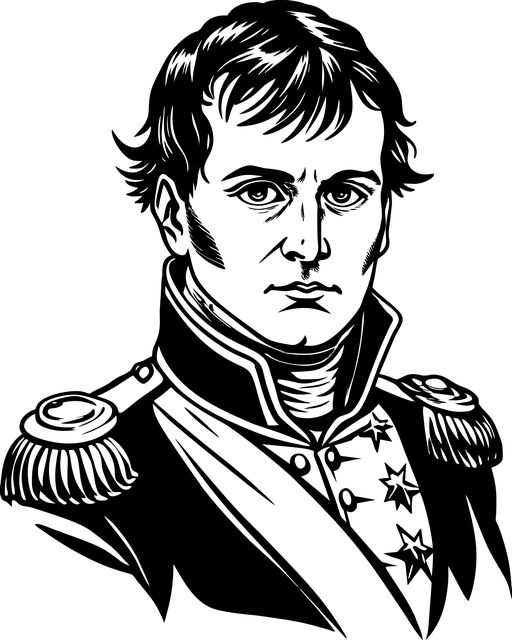
Napoleon, the Duke of Enghien, 1804 — and Why the Maduro Affair Feels Like a Historical Echo
UrealObject Analysis
History rarely repeats, but it has a habit of leaving fingerprints. Every so often, a modern geopolitical shockwave carries the unmistakable outline of an older, darker moment — a moment when a single decision fractures the established order and forces the world to recalibrate.
One of the clearest examples of such a rupture is the 1804 execution of the Duke of Enghien, the event that transformed Napoleon Bonaparte from a powerful, controversial leader into a man the European system could no longer tolerate.
And strangely enough, that same structural pattern — the sudden, irreversible break — now hovers over the international drama surrounding Nicolás Maduro.
This is not a comparison of personalities. It’s a comparison of moments.
The Enghien Affair: When Napoleon Crossed the Line
In March 1804, Napoleon ordered the abduction of Louis Antoine, Duke of Enghien, from neutral German territory. The Duke was accused of participating in royalist conspiracies — accusations that were, even at the time, considered thin.
He was rushed through a military tribunal and executed by firing squad.
Europe reacted with a mixture of horror and clarity.
“This was not justice. This was a message.”
Another observer noted:
“From this night forward, Napoleon stands alone.”
The Enghien execution didn’t weaken Napoleon militarily — but it destroyed his legitimacy in the eyes of Europe’s monarchies. It was the moment when he ceased to be a political actor within the system and became a threat to the system itself.
After Enghien, coalitions against him were no longer optional. They were inevitable.
Maduro: A Modern Shock to the System
Fast-forward two centuries.
The dramatic U.S. operation that resulted in Maduro’s capture and extradition is not equivalent in scale or morality to the Enghien affair — but the structural effect is eerily similar.
It is a moment that:
- breaks long-standing diplomatic norms,
- forces every regional actor to choose a side,
- and signals that the old rules of engagement are no longer in force.
For Washington’s allies, it is a demonstration of resolve. For its rivals, it is a violation of sovereignty. For Latin America, it is a geopolitical earthquake.
And for the international system, it is a moment of irreversibility.
Just as in 1804, a single decisive act has redrawn the map of what is politically possible.
The Pattern Behind the Parallel
The analogy becomes clear when you strip away personalities and look at the geometry of the moment.
1. A leader acts outside the expected boundaries.
Napoleon violated sovereignty and executed a royal. The U.S. operation against Maduro shattered diplomatic precedent.
2. The act forces the entire system to react.
In 1804, monarchies realized Napoleon could not be “managed.” Today, nations must decide whether they accept or reject the precedent set by Maduro’s capture.
3. The world enters a new phase.
After Enghien, Europe marched toward the War of the Third Coalition. After Maduro, Latin America enters a period of strategic uncertainty.
The personalities differ. The pattern does not.
So Why Does UrealObject Care?
Because this is exactly the kind of moment we specialize in: the hinge points where history tilts, and the future becomes something else entirely.
The Enghien Affair was not about a duke. It was about the system realizing that Napoleon had crossed a line that could not be uncrossed.
The Maduro affair is not about one man either. It is about the international order discovering that the rules it thought were stable may no longer apply.
A Closing Wink to History
A British observer wrote after Enghien’s execution:
“Napoleon has fired a shot that will echo across Europe.”
If he were alive today, watching the Maduro saga unfold, he might update the line:
“And apparently, the echo now comes with satellite coverage and a press briefing.”
Nik PV
If you want to support the project, this donation helps — especially by Friday, when coffee taps out and reality blurs…